
Leadership & Ideology
- Home
- Leadership
Tribal Governance & Community Structure
The Katkari tribal community, to which Nagya Mahadu Katkari belonged, followed a deeply rooted system of collective governance that was shaped by tradition, mutual responsibility, and respect for elders. Unlike centralized political systems imposed during colonial rule, tribal governance operated through community consensus. Decisions affecting the village were discussed in open gatherings where senior members, respected elders, and experienced hunters or workers shared their views. Leadership was not merely about authority but about service and protection of the community’s welfare. The headman or local leader functioned as a guide rather than a ruler, ensuring harmony, resolving disputes, and safeguarding cultural practices. This decentralized and participatory structure created strong bonds among families and strengthened social unity.
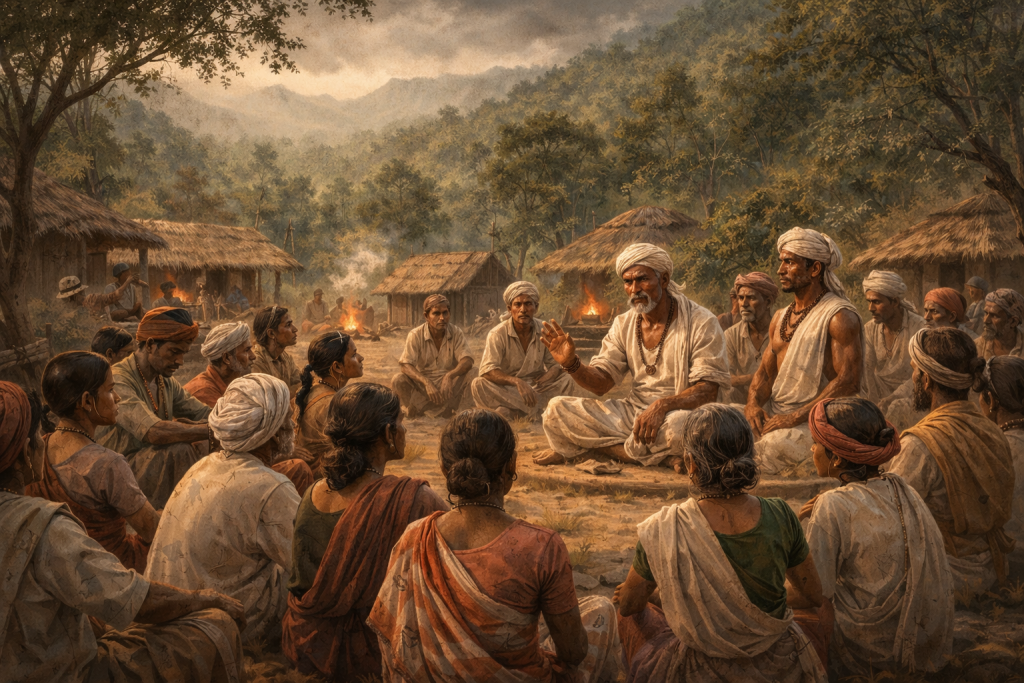
The social organization of the Katkari community revolved around kinship ties and shared labor. Families lived in close clusters, supporting one another during agricultural seasons, forest gathering activities, and times of hardship. Community responsibilities were divided based on experience, skill, and age. Elders preserved oral history and traditions, women played a vital role in sustaining household economies and cultural continuity, and youth contributed through physical labor and protection of village resources. Customs, festivals, and rituals reinforced a shared identity and spiritual connection with nature. Justice systems were informal but effective, often resolved through dialogue and collective agreement rather than punishment. This structure ensured that disputes did not fragment the community, maintaining social balance and unity.
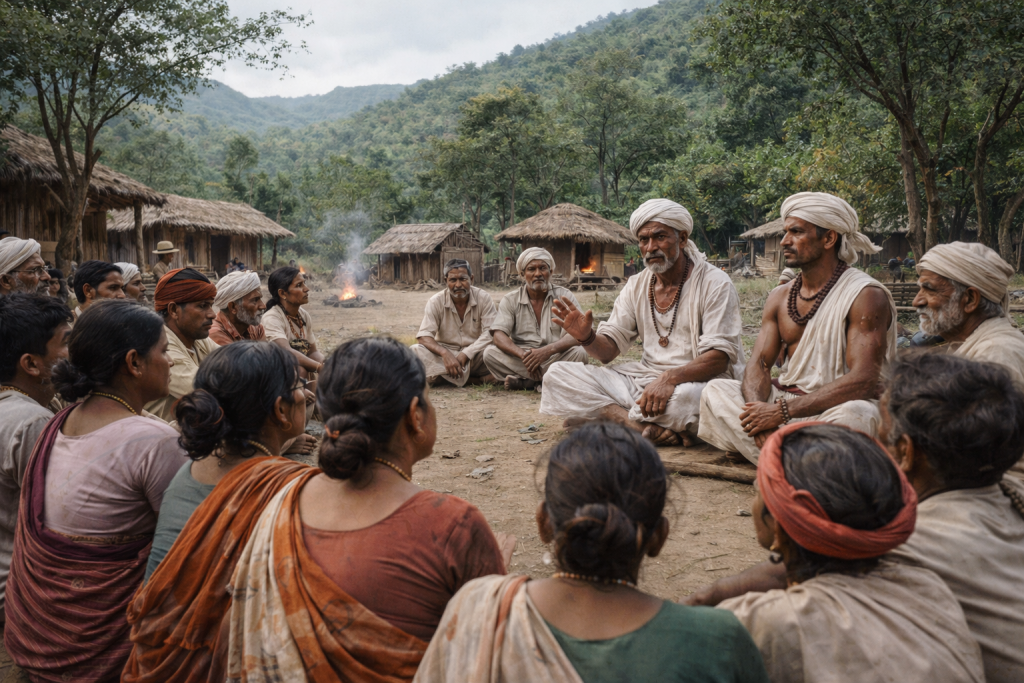
During the period of British colonial interference, this traditional governance system came under pressure. External laws disrupted local authority, particularly through forest regulations and administrative controls that ignored tribal decision-making processes. Despite these challenges, leaders like Nagya Mahadu Katkari relied on the strength of community structure to mobilize resistance. Meetings were organized discreetly within village gatherings, and communication spread through trusted family networks. The tribal governance model allowed swift collective action because decisions were already rooted in shared values and mutual trust. Even in the face of repression, the Katkari community’s governance framework preserved its cultural integrity and strengthened solidarity. Their system demonstrated that leadership was inseparable from community welfare, and resistance was not an individual act but a collective responsibility grounded in ancestral tradition.
Freedom Ideals & Resistance Philosophy

Freedom as Dignity and Land Rights
For Nagya Mahadu Katkari, freedom was not merely the absence of foreign rule but the restoration of dignity, land, and traditional rights. He believed that true independence meant reclaiming the forests, livelihoods, and cultural identity of the Katkari people. Colonial forest laws had stripped communities of their ancestral relationship with nature, turning survival into a punishable act. Nagya’s philosophy centered on the idea that land and forest were sacred trusts passed down through generations. Protecting them was both a moral duty and a collective responsibility, making resistance an act of justice rather than rebellion.

Collective Strength and Moral Courage
Nagya Mahadu Katkari’s resistance philosophy emphasized unity, courage, and shared responsibility. He encouraged his community to stand together, reminding them that strength came from solidarity rather than individual action. His approach avoided blind violence; instead, it focused on moral courage and disciplined resistance against injustice. By organizing village councils and secret gatherings, he reinforced the belief that every member of the community played a role in safeguarding freedom. His ideals were rooted in respect for elders, protection of culture, and defense of livelihood.
Protection of Katkari Identity & Traditions
Safeguarding Ancestral Customs
Nagya Mahadu Katkari understood that resistance was not only about political freedom but also about protecting the cultural soul of the Katkari community. Traditional rituals, seasonal festivals, folk songs, and oral storytelling formed the foundation of tribal identity. He encouraged elders to continue passing down ancestral knowledge, ensuring that younger generations remained connected to their roots. Despite colonial interference and social marginalization, the community preserved its spiritual practices tied closely to forests and local deities. By strengthening pride in their customs, Nagya reinforced unity and resilience, making cultural preservation a silent yet powerful form of resistance.
Defense Language & Heritage
The Katkari community relied heavily on oral tradition to preserve history, values, and collective memory. Nagya promoted the continuation of storytelling gatherings where elders shared legends, moral lessons, and accounts of resistance. Language became a symbol of identity, binding families and villages together. Even during times of repression, maintaining traditional speech and expressions protected the community from cultural erosion. He believed that losing language meant losing history, and losing history meant weakening resistance. Through conscious efforts to uphold oral heritage, Nagya ensured that Katkari identity remained alive, strong, and rooted in ancestral pride.
Unity Through Shared Traditions
Customs and collective celebrations played a vital role in strengthening social bonds within the Katkari community. Nagya encouraged participation in communal rituals, harvest gatherings, and traditional dances as expressions of solidarity. These shared traditions reinforced mutual trust and cooperation, which later supported organized resistance efforts. Cultural unity created emotional strength, helping the community endure hardship and external pressure. By protecting traditional dress, lifestyle patterns, and village practices, Nagya preserved not only identity but also the moral foundation of resistance. In safeguarding traditions, he ensured that freedom would protect both land and culture together.
Safeguarding Ancestral Customs
Nagya Mahadu Katkari believed that protecting identity also meant safeguarding traditional occupations. The Katkari way of life was closely linked to forest gathering, small-scale farming, fishing, and seasonal craftsmanship. Colonial forest restrictions threatened not only economic survival but also cultural independence. Nagya encouraged families to continue practicing ancestral skills despite limitations, reinforcing self-reliance and pride in their heritage. Traditional tools, methods of cultivation, and forest knowledge were treated as valuable inheritance. By defending livelihood practices, he ensured that culture remained active and living—not reduced to memory but sustained through everyday work and resilience.
Respect for Elders and Community
Within the Katkari social structure, elders were guardians of tradition and moral guidance. Nagya strengthened this structure by promoting respect for senior members and their decisions in community gatherings. He understood that wisdom carried through generations was essential for cultural survival. Elders preserved stories of ancestors, spiritual beliefs, and customary laws that shaped identity. By upholding this respect-based hierarchy, he prevented fragmentation within the community. Even during resistance activities, counsel from experienced members guided collective decisions. This intergenerational connection reinforced stability, ensuring that traditions remained deeply rooted despite external challenges.
Spiritual Connection with Nature
The Katkari identity was inseparable from its spiritual relationship with forests, hills, and natural forces. Nagya emphasized that protecting nature was equal to protecting culture. Ritual offerings, seasonal prayers, and reverence for local deities symbolized harmony between people and environment. Colonial policies that restricted forest access threatened this sacred bond. Through resistance, Nagya defended not only physical territory but also spiritual belonging. He reminded his people that forests were ancestors’ gifts and sources of strength. By preserving this sacred connection, the community maintained its cultural confidence, ensuring that tradition and freedom remained united.
Tribal Governance & Community Structure
The Katkari tribal community, to which Nagya Mahadu Katkari belonged, followed a deeply rooted system of collective governance that was shaped by tradition, mutual responsibility, and respect for elders. Unlike centralized political systems imposed during colonial rule, tribal governance operated through community consensus. Decisions affecting the village were discussed in open gatherings where senior members, respected elders, and experienced hunters or workers shared their views. Leadership was not merely about authority but about service and protection of the community’s welfare. The headman or local leader functioned as a guide rather than a ruler, ensuring harmony, resolving disputes, and safeguarding cultural practices. This decentralized and participatory structure created strong bonds among families and strengthened social unity.
The social organization of the Katkari community revolved around kinship ties and shared labor. Families lived in close clusters, supporting one another during agricultural seasons, forest gathering activities, and times of hardship. Community responsibilities were divided based on experience, skill, and age. Elders preserved oral history and traditions, women played a vital role in sustaining household economies and cultural continuity, and youth contributed through physical labor and protection of village resources. Customs, festivals, and rituals reinforced a shared identity and spiritual connection with nature. Justice systems were informal but effective, often resolved through dialogue and collective agreement rather than punishment. This structure ensured that disputes did not fragment the community, maintaining social balance and unity.
During the period of British colonial interference, this traditional governance system came under pressure. External laws disrupted local authority, particularly through forest regulations and administrative controls that ignored tribal decision-making processes. Despite these challenges, leaders like Nagya Mahadu Katkari relied on the strength of community structure to mobilize resistance. Meetings were organized discreetly within village gatherings, and communication spread through trusted family networks. The tribal governance model allowed swift collective action because decisions were already rooted in shared values and mutual trust. Even in the face of repression, the Katkari community’s governance framework preserved its cultural integrity and strengthened solidarity. Their system demonstrated that leadership was inseparable from community welfare, and resistance was not an individual act but a collective responsibility grounded in ancestral tradition.