
Katkari Resistance Movement
- Home
- Movement
Struggle for Forest Rights
Nagya Mahadu Katkari emerged during a time when the Katkari tribal community of Maharashtra faced intense economic exploitation and social marginalization under British colonial rule. The Katkari people, traditionally dependent on forests for livelihood, were severely impacted by restrictive forest laws and revenue policies imposed by the colonial administration.
Restrictive Forest Laws: British regulations denied traditional forest access to tribal communities.
Economic Exploitation: Heavy taxes, forced labor, and bonded work practices increased poverty.
Loss of Livelihood: Hunting, wood collection, and shifting cultivation were criminalized.
Social Marginalization: Tribal communities faced systemic discrimination and exclusion.
Rise of Tribal Leadership: Local leaders like Nagya Mahadu Katkari mobilized communities toward resistance.
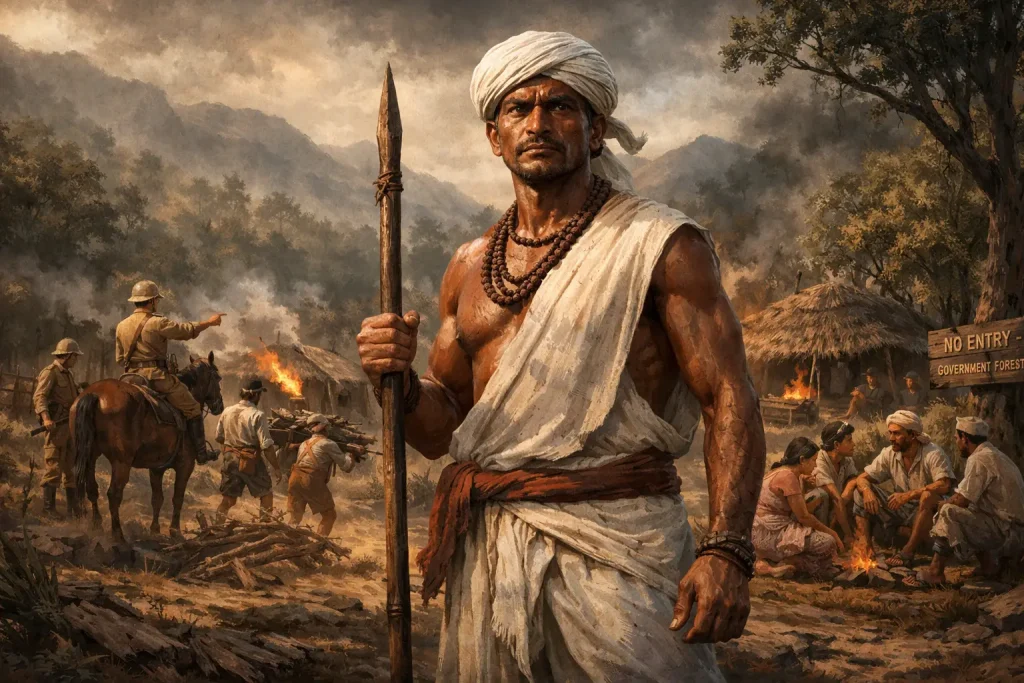

Breaking Forest Restrictions
When British forest laws denied the Katkari community access to their traditional lands, Nagya Mahadu Katkari openly challenged these unjust policies. He encouraged villagers to reclaim their right to gather forest produce and use natural resources .

Organizing Direct Resistance
Nagya mobilized tribal youth and elders to resist exploitative colonial practices. Secret meetings were held in forest clearings where strategies were planned. His leadership transformed scattered anger into organized resistance against British authority.

Confrontations Colonial Forces
As resistance grew stronger, clashes between tribal groups and British officials intensified. Using their deep knowledge of forest terrain, Nagya and his followers adopted guerrilla-style tactics to evade capture and challenge colonial control.

Martyrdom and Legacy
The British administration responded with harsh repression. Despite facing arrest and severe punishment, Nagya Mahadu Katkari remained steadfast in his cause. His sacrifice strengthened the spirit of resistance and made him a lasting symbol of courage and tribal pride.
Struggle for Forest Rights
Nagya Mahadu Katkari led resistance efforts that relied heavily on the dense forests and rugged hills of Maharashtra. The Katkari community possessed deep knowledge of the land—its hidden paths, water sources, and natural shelters—which became a powerful advantage against British forces. Rather than engaging in open battlefield confrontations, Nagya and his companions used swift, strategic movements through forest terrain. They organized small groups that could quickly disperse and regroup, making it difficult for colonial authorities to track or capture them. The forest was not just their home; it became their shield and silent ally in the struggle.
These guerrilla actions were aimed at resisting oppressive forest laws, protecting village resources, and challenging colonial control. Night-time movements, surprise resistance, and coordinated communication through trusted community networks strengthened their efforts. The Katkari fighters avoided unnecessary violence, focusing instead on reclaiming dignity and safeguarding livelihoods. British patrols often found themselves unfamiliar with the terrain, while tribal fighters moved with confidence and precision. Through these forest-based strategies, Nagya transformed traditional survival skills into instruments of resistance. His leadership demonstrated how indigenous knowledge and unity could stand against powerful colonial systems, turning the wilderness into a symbol of freedom and resilience.